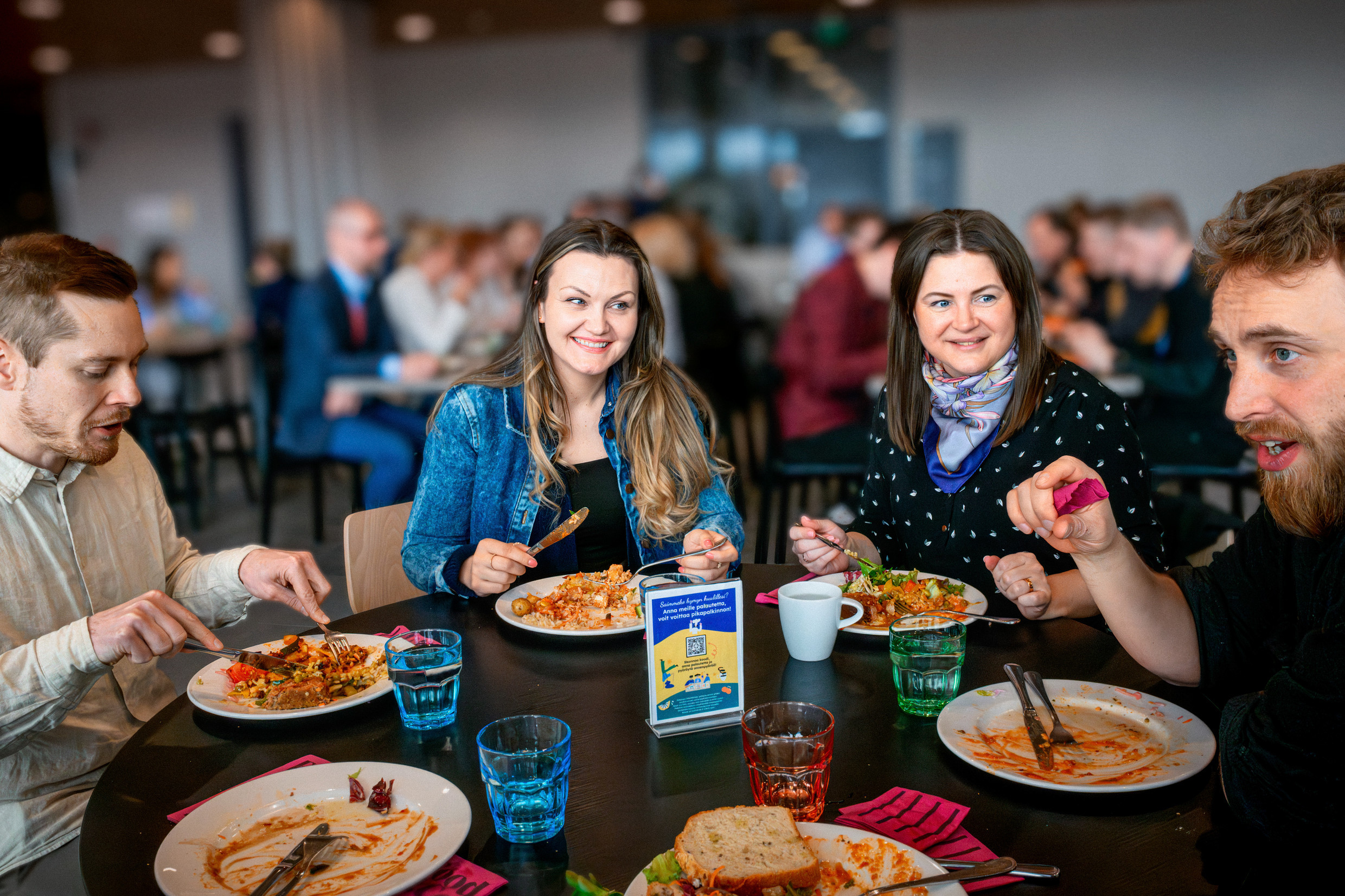
The smell of pizza and a cheerful buzz greet visitors to a lunch restaurant in a high-tech centre in Espoo, outside Helsinki. It is lunchtime, a high point for many of those who work here.
Many Finnish employers subsidise part of the working lunch to support wellbeing and increase productivity. But not all workers can grab a healthy lunch. The trend is towards shorter and fewer lunch breaks.
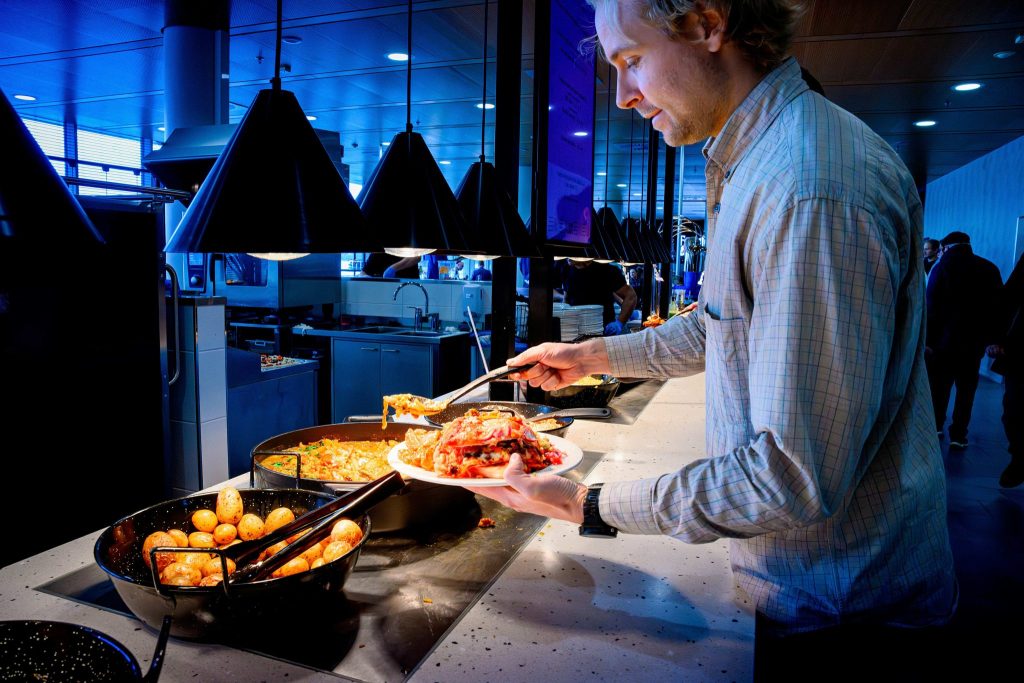
The Let’s Play restaurant is nearly full by 1130 am. The lunch guests come from the many companies that hire offices at HTC Waterfront, but the restaurant is open to all.
Lunch costs around 14 euro, but the tax-free lunch benefit provided by the employer shaves 25 per cent off that price.
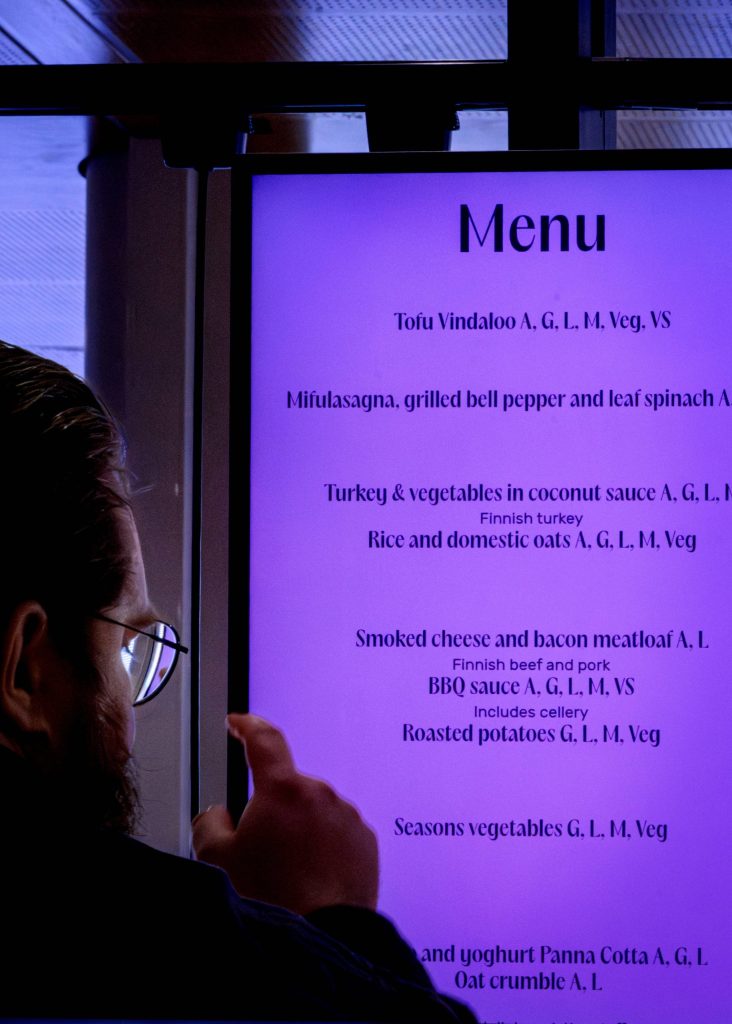
The menu offers hearty, homely food; salads and warm dishes with pizza as one of the alternatives. And of course there is a dessert buffet and coffee.
Many tech and startup companies are based here. The atmosphere in the lunch restaurant does not match the image of introverted, quiet Finns. The guests are sat around big tables together with colleagues in lively conversation.
State-recommended breaks for health and productivity
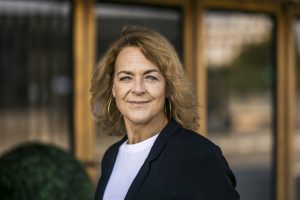
“You don’t have to check the menu to find something good to eat here,” says Julia Krohn. She is here with five colleagues from the startup company Smartvatten which develops data-driven monitoring of water use.
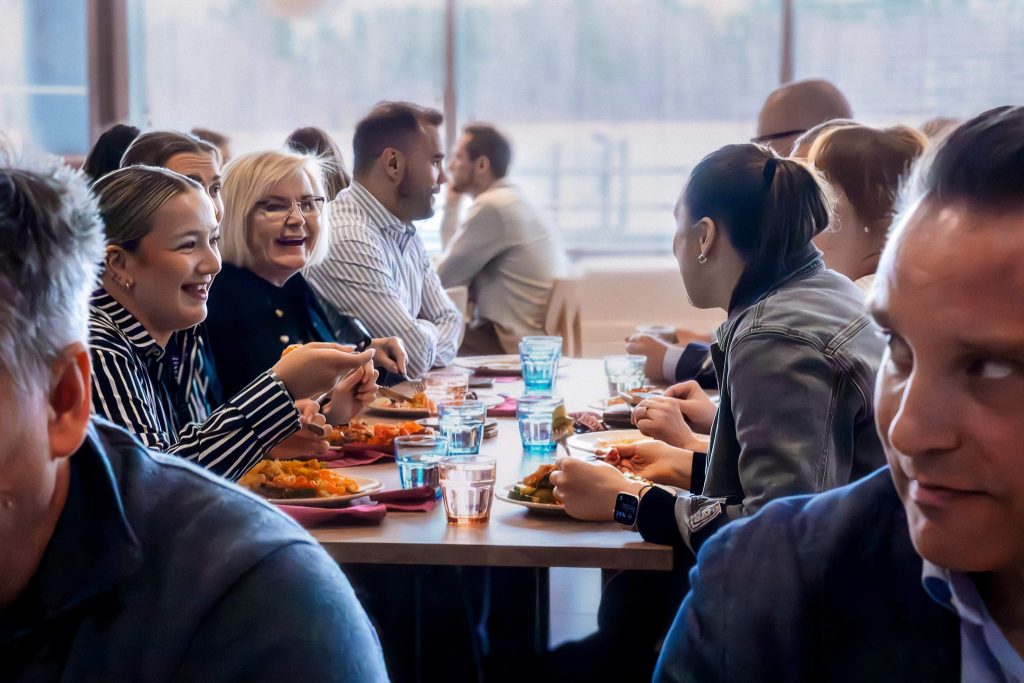
The food break sometimes goes beyond the allotted 30 minutes, the group admits. They often discuss work-related issues, while the lunch serves as a relaxing break.
This is exactly what Finnish authorities want to see. A few years ago, the National Nutrition Council published the first state recommendation for meals during working hours.
“Inequality on a plate”
It is largely based on the Nordic nutrition recommendations which have been published since 2014. The aim is to improve the diet of working age people, support energy levels and maintain good work capacity.
This is a given for those working at high-tech offices in Espoo, but many other Finns need to improve their food habits.
Many meals contain too much salt and saturated fat and not enough greens, fruit, whole grains and pulses. This heightens the risk of chronic diseases and reduces work capacity.
Diet problems hit people in weaker socioeconomic positions harder. Different health outcomes between different socioeconomic groups are larger in Finland than in many other Western countries.
The difference on the plate and in wellbeing among people of working age has increased, which was one of the reasons behind the state recommendation.
Shorter and fewer lunch breaks
The lunch is the most important meal of the day. Many of those we talk to say they like to come here, it always does them good. There is not much sign here of what is emerging from new research about ever shorter lunch breaks.
This trend has been seen in Finland, the rest of the Nordics and internationally.
A survey from Compass Group, that also owns this lunch restaurant, shows that the number of workers who take lunch breaks at least three times a week has fallen from 81 to 61 per cent in recent years.
The survey was completed by 30,000 workers across 21 countries. It also shows that lunch breaks have become shorter in many countries. Remote working, which is still widespread in Finland after the COVID-19 pandemic, is a likely explanation.
A challenging pandemic lockdown
Compass Group is a global service company based in the UK, and operates across 30 countries. They serve 15 million lunches every day. In the Nordics, the company has grown by acquiring staff restaurants and canteens.
In Finland, Compass Group runs more than 530 restaurants serving 100,000 lunches daily. Some of the company’s growth comes from the acquisition of Fazer’s lunch restaurants just before the COVID-19 pandemic.
“That was a challenging time, with remote work and shuttered workplaces,” admits Merja Olari-Sintonen, communications marketing and brand lead at Compass Group Finland.
She cannot give a single answer for why the lunch breaks keep changing, but working from home is a contributing factor.
Turning to snacks
Many Finnish office workers still work partly from home and eat less regularly. Other issues impacting food habits include increased demands for efficiency, greater uncertainty in the labour market and tighter lunch budgets.
Short food breaks are particularly common for healthcare workers and teachers. Many younger workers have less healthy routines, for instance snacking during small micro breaks. This leads to poorer recovery and lower productivity.
The trends are the same across the Nordic region. The average lunch break in Finland lasts 23 minutes, in Denmark around 25 and 27 minutes in Norway.
Sweden stands out
Swedish workers brake for more than half an hour for lunch, the longest in the Nordics, according to Compass Group survey.
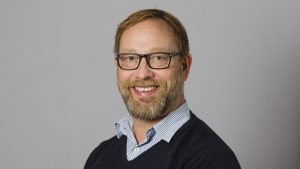
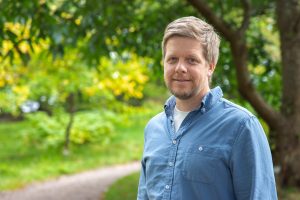
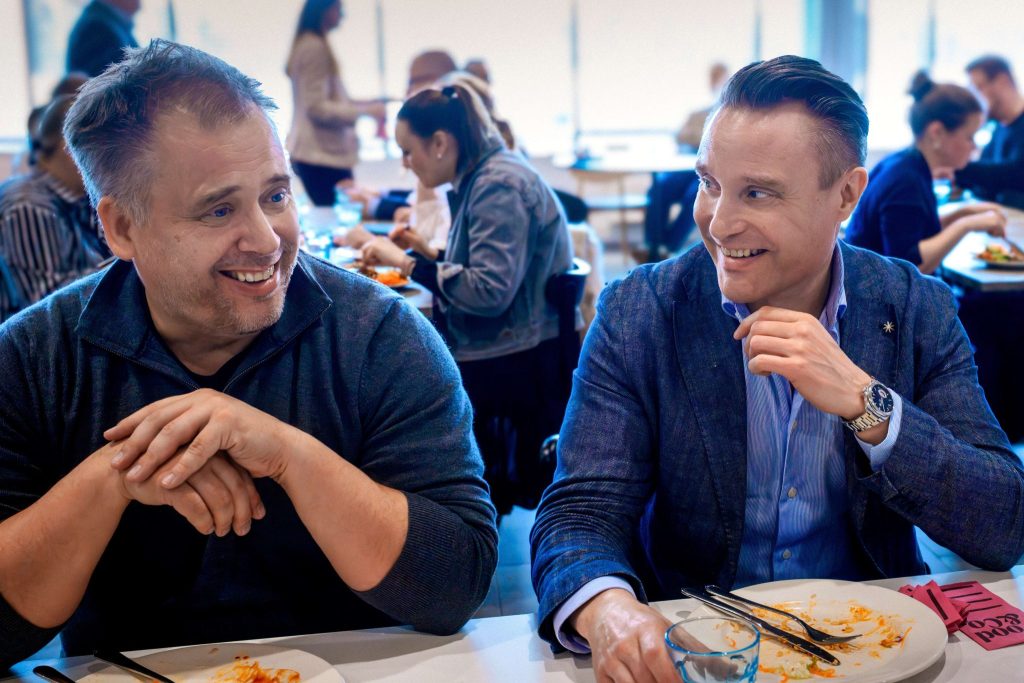
That comes as no surprise to Jukka Mäkelä, Markus Hakala and Pekka Mairinoja from the company Carbon Free Technologies. They have experienced long lunch breaks with Swedish colleagues, where discussions are often in-depth with much to cover.
They admit that Finnish lunch breaks can drag on too.
“It’s an important social thing, which can make it more fun to go to the office rather than work from home. Food is not just a private matter, it can also be part of negotiations with other companies.”
When the office is empty, it is possible to go for lunch and meet people from other companies. The atmosphere at the lunch restaurant in Espoo is enthusiastic and creative, and it is easy to come across fresh ideas, explains Markus Hakala.
The alternative: a lunch box
Meals can still present a tricky social experience for some Finns, the colleagues admit. Not everyone wants to eat together but bring a lunch box to eat at their desk.
Food allergies can also be a reason for bringing your own food.
Not everyone’s working rhythm allows for meal breaks, at least not during working hours. There are, however, two “statutory” coffee breaks on paid time. Most collective agreements in Finland include provisions for one or two coffee breaks of 10 to 15 minutes per day.
Similar, yet distinct
Both the lunch teams we talk to have been eating their way around the world on business trips. The Smartvatten colleagues remember how surprised their Dutch guests where when they visited Espoo and were expected to eat a substantial lunch at 11 am.
The three managers from Carbon Free Technologies remember bad meals from other parts of the world, compared to the “proper food” that is being served in their own office.
They are most surprised over the Norwegian and Danish food habits – the open sandwiches with brown cheese and jam, or the Danish smörrebröd culture.
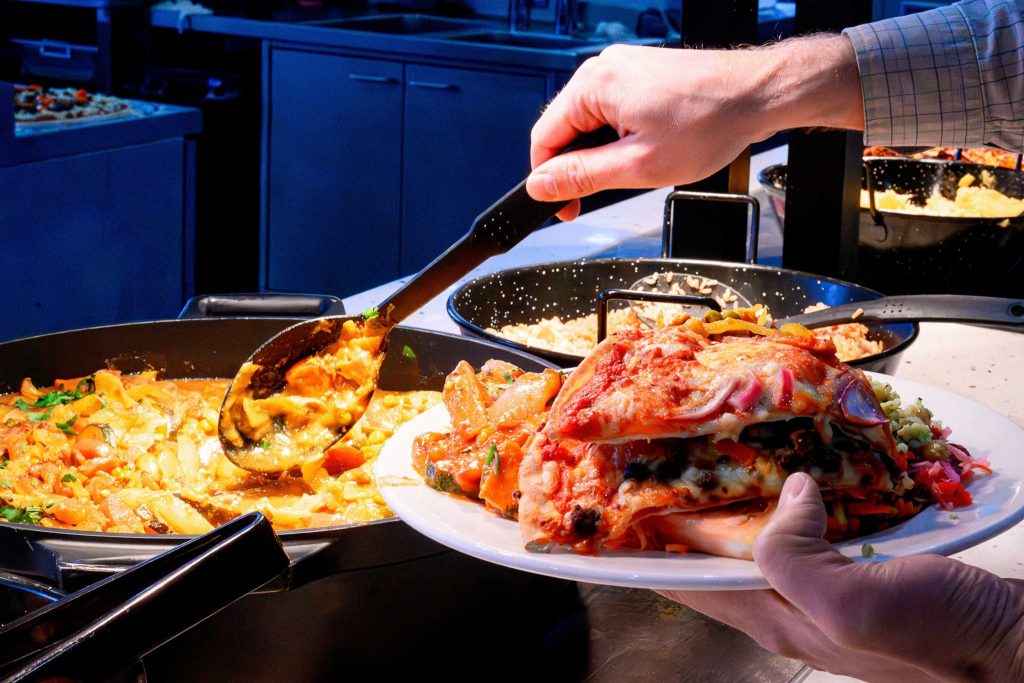
Food habits have distinct national characteristics, confirms Merja Olari-Sintonen. In Finland there are Finnish recipes, in other countries people also want familiar dishes. Compass Group has no multi-national menu that must be followed throughout the chain.
“You notice from the menu and the aromas whether you’re in a Finnish staff canteen, a Danish or Norwegian one or in a Swedish lunch restaurant.”
According to the survey, Finns are nevertheless happy to experiment with new recipes and dishes – and vegetarian food is popular. Globally, the Finns are also very health conscious, says Merja Olari-Sintonen.
Different needs and desires
Compass Group’s lunch concept is meant to meet all customers’ needs, local characteristics and consumers’ expectations. Despite its international network of restaurants, the Compass Group has different national solutions.
Office workers at a startup have different needs and habits than civil servants in government agencies or people in physically demanding jobs in the construction industry.
After many years of pandemic-related disruptions to staff lunches, it looks like it is good business to offer healthy food to workers again. It is at the very least a competitive advantage.
“The lunch is the highlight of the day. And that’s not only about food, but also the opportunity to meet colleagues in a creative environment.”
The lunch restaurant, parking facilities and gym were all important factors when Jukka Mäkelä’s business set up office here.
Their offices have a view of the sea and many other high-tech companies in Espoo, as well as the Aalto University – a suitable address.
Higher education, better food opportunities
Working life has changed rapidly. Remote and hybrid work has become more common in the wake of the pandemic while travel has been cut back. Shift work and unusual working hours disrupt healthy food habits.
The cheerful lunch groups in Espoo illustrate the lunch issue very well. A survey from the Finnish Institute for Health and Welfare shows that only half of the respondents had the opportunity to eat at work or in school.
Those with higher education had more opportunities for lunch breaks. For many Finns, their home or work desk remains the most common lunch space.